
Indie devs sorely need playtesting. The G.R.I.D. is here to provide.
Toronto's structured playtesting bash is back, and we're loving it

Last year, Antonio Miceli had an idea to bring back something he once found very valuable as a game developer. Structured playtesting is a largely unmet need on the indie dev scene, and Miceli’s event, called the G.R.I.D., was meant to fill that gap—even as a one-off.

The 2025 edition was widely successful. 24 games, several dozen eager playtesters, and even more keen media observers who all wondered by the end of it whether the G.R.I.D. would be back.
Fast-forward to now, and the answer is a resounding yes.
You want games? I’ll give you games
Last Friday, June 12, 2026, saw a triumphant return of the G.R.I.D. to the George Brown Waterfront campus.
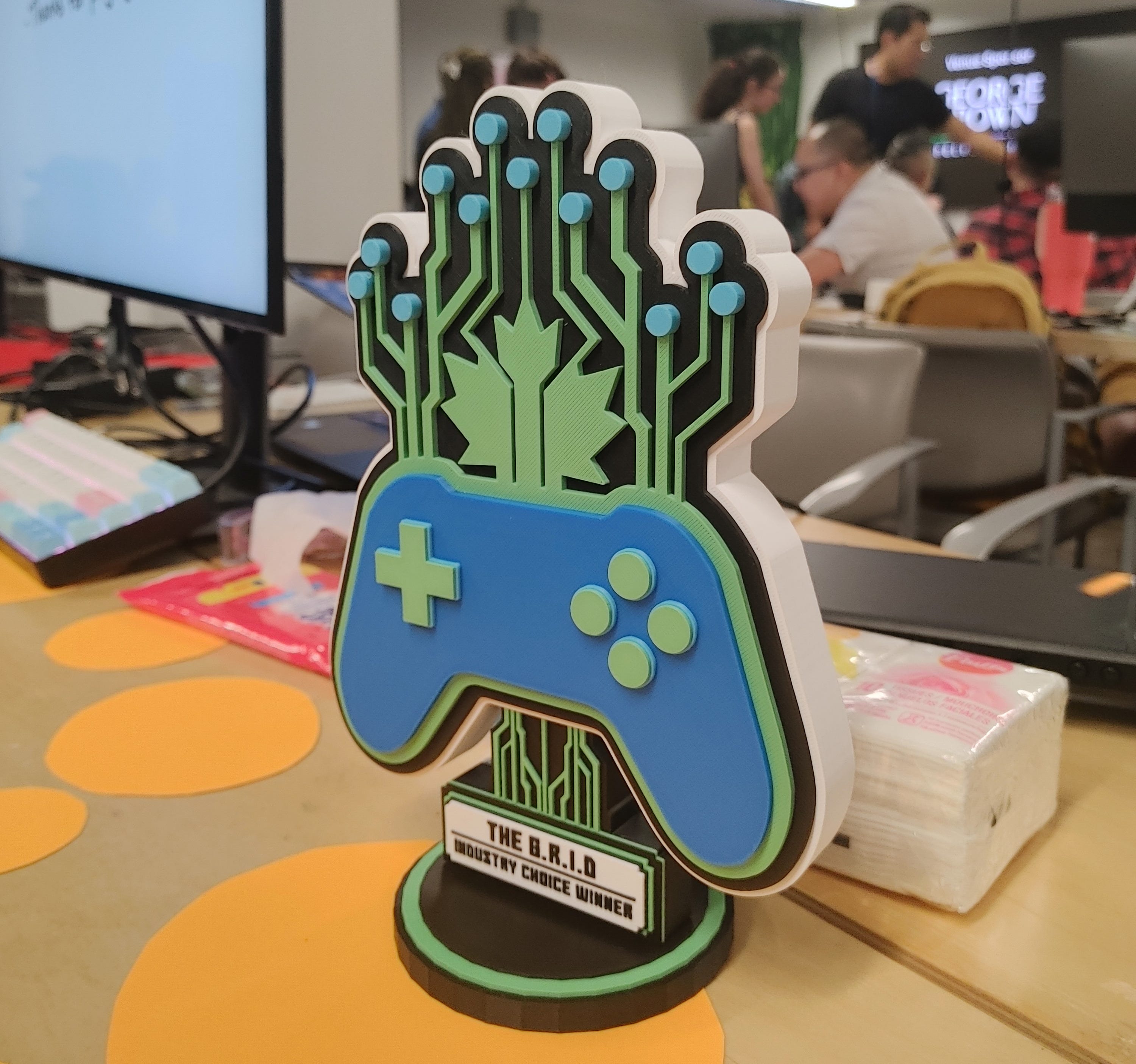
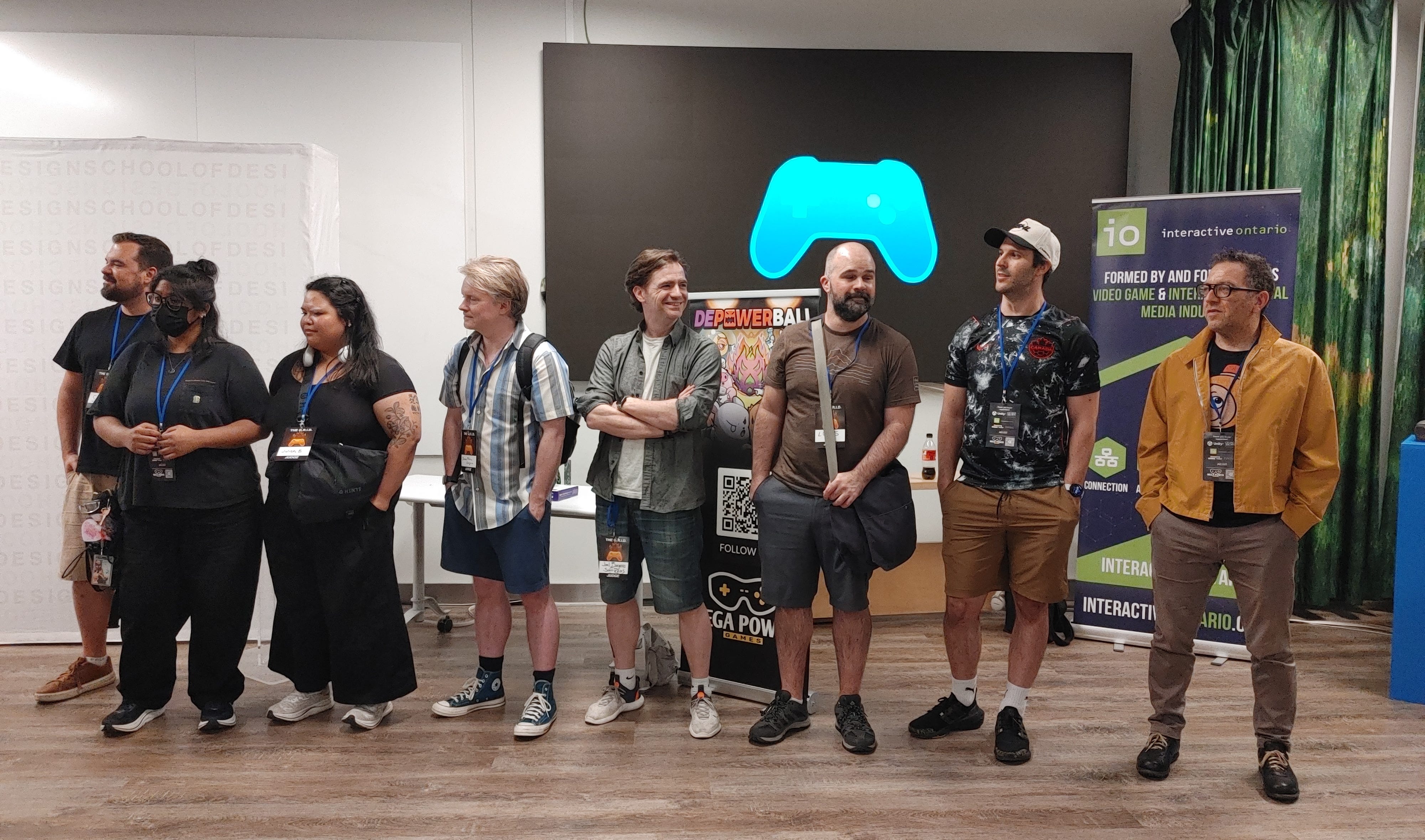
What was an experiment last year returned this time as a cool, calm, and collected part of Toronto Games Week, complete with an impeccable panel of judges, a hundred playtesters, and a lineup of actual, very neat-looking trophies.
The judging panel was in play last year, too, but this time they were much more prominent in the room, checking out the 36 games present, up from last year’s 24.
Despite the larger number of games and developers in attendance, the playtesting area felt remarkably less hectic (and stuffy). The event’s upped runtime clearly played a part: having five hours instead of meagre three made a big difference for all involved, although it was certainly much more exhausting for the volunteers, the judges, and for Miceli himself.
Out with paper scoring sheets, in with the app
The biggest contributor to the vibe shift was undoubtedly the app that replaced last year’s old-school paper questionnaires.
In preparation for the event, Miceli developed and coded his own custom app called Pulse to facilitate the G.R.ID.’s logistics. Everything from feedback surveys, voting, and raffle entries to game information and profiles was pulled into one interface.


Miceli readily admits that the G.R.I.D.’s success hinged on the app’s performance:
Last year, I was staking [my] reputation on an event that I was a complete unknown about and was just trying to get off the ground. This year, staking my reputation on an app and web ecosystem that I’ve spent the last six months building and using the people as my proverbial QA team, praying that it doesn’t blow up. Because if the app doesn’t work, there is no event.
The app’s performance was inconsistent, but not event-breaking. There were glitches, including on my end, that were completely cured by the good ol’ app reinstall.
As a member of the media, I was excluded from using much of the app’s functionality. Its core functions—game surveys and voting—were reserved for playtesters and judges, and it was obvious that it made their lives much easier than last year.
[For] some people it’s working perfectly, for some people it’s not… My goal for this event was not “perfect”, it was “works just well enough”. By the time I ultimately release this as a paid product, we should not have these problems.
– Antonio Miceli, the G.R.I.D. organizer
I was heartened to hear that Miceli’s hard work was not only for the benefit of the event, but for his own as well. Since his plan is to ultimately commercialize Pulse and release it publicly to aid other event organizers and game developers, I couldn’t think of a better way to battle-test it than at the G.R.I.D, attended by several hundred people.
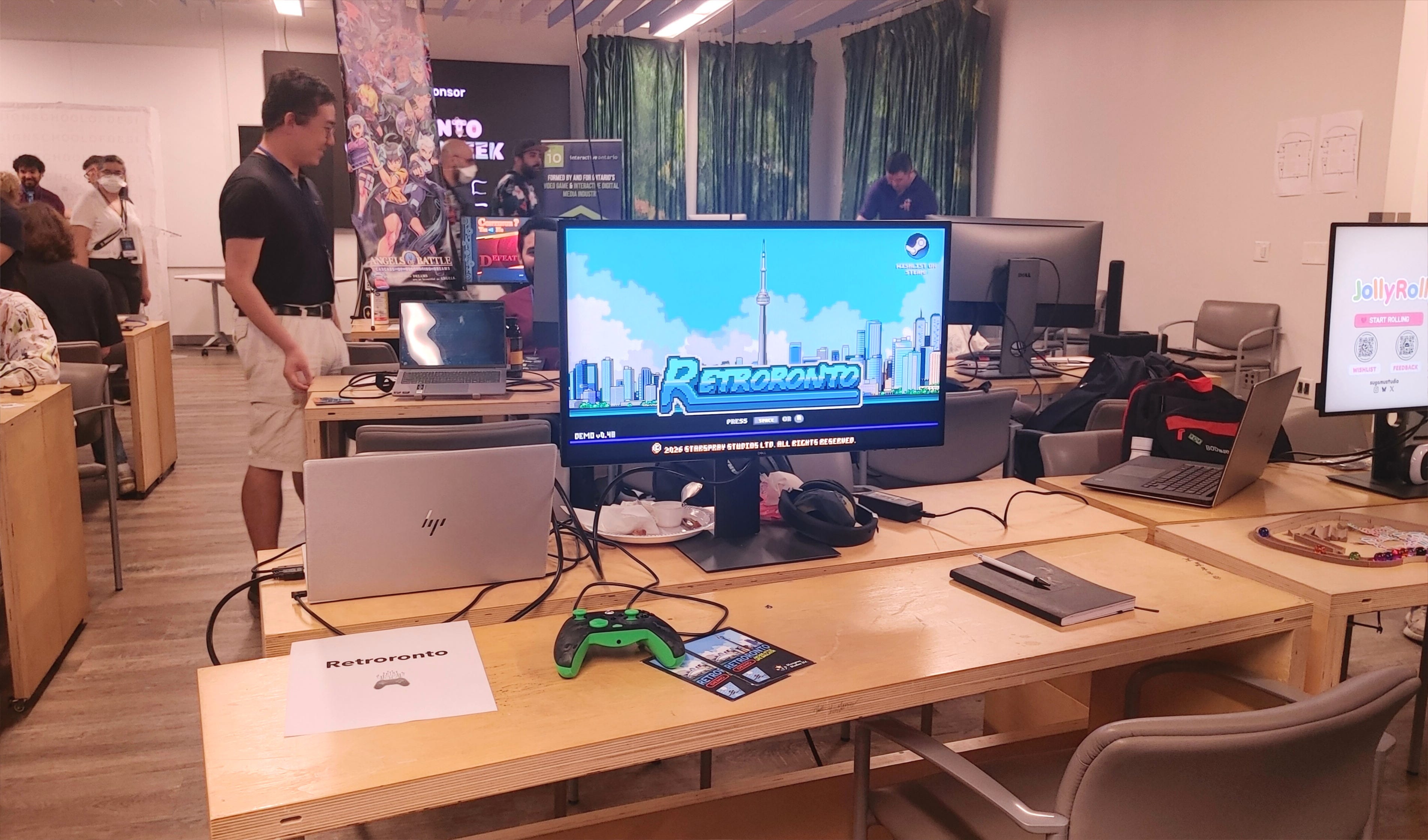
I loved having it as a simple, handy reference while checking out the games. My plan, as always, was not to interfere with playtesters actually doing their jobs, so I scouted the room for empty seats whenever one popped up, and managed to try a few games, including some that looked very familiar…
The games
From my report last year, you may remember JollyRoll by Sugamu Studio, which was tons of fun and looked really polished already. This time, Raheel and Matthew are back in full force with stickers, a Steam page, and big plans to release as soon as next year if they secure the funding they need. The demo now has multiple levels, a gorgeous overworld map you can zoom about, and a more fleshed-out soundtrack and audio.
I checked out After Angel by Comfort Games, the beginnings of an action adventure that looked a tad early-stages visually, but pulled off fluid movement and smooth traversal. After Angel is going to be interesting to follow, especially considering it’s all coded by a solo developer!
Another silly game I very much enjoyed, whose concept I won’t divulge but which made me chuckle all the way through, is Hello, Cave Monster by Computechnosoft. Dante Camarena, the lead developer of my beloved North Shore, is involved with the project, which, I feel, is enough of an endorsement to get you all excited for the game’s eventual release… whenever that may be.

I also played Gladiotron (yes, Gladiator + Tron) by Full Circle CS Inc, a 3D metroidvania whose arena battles gave me a taste of bullet hell, and Marco Polo, a charming and very creative two-player co-operative game by Overnight Games that adults and kids alike would adore.
The awards
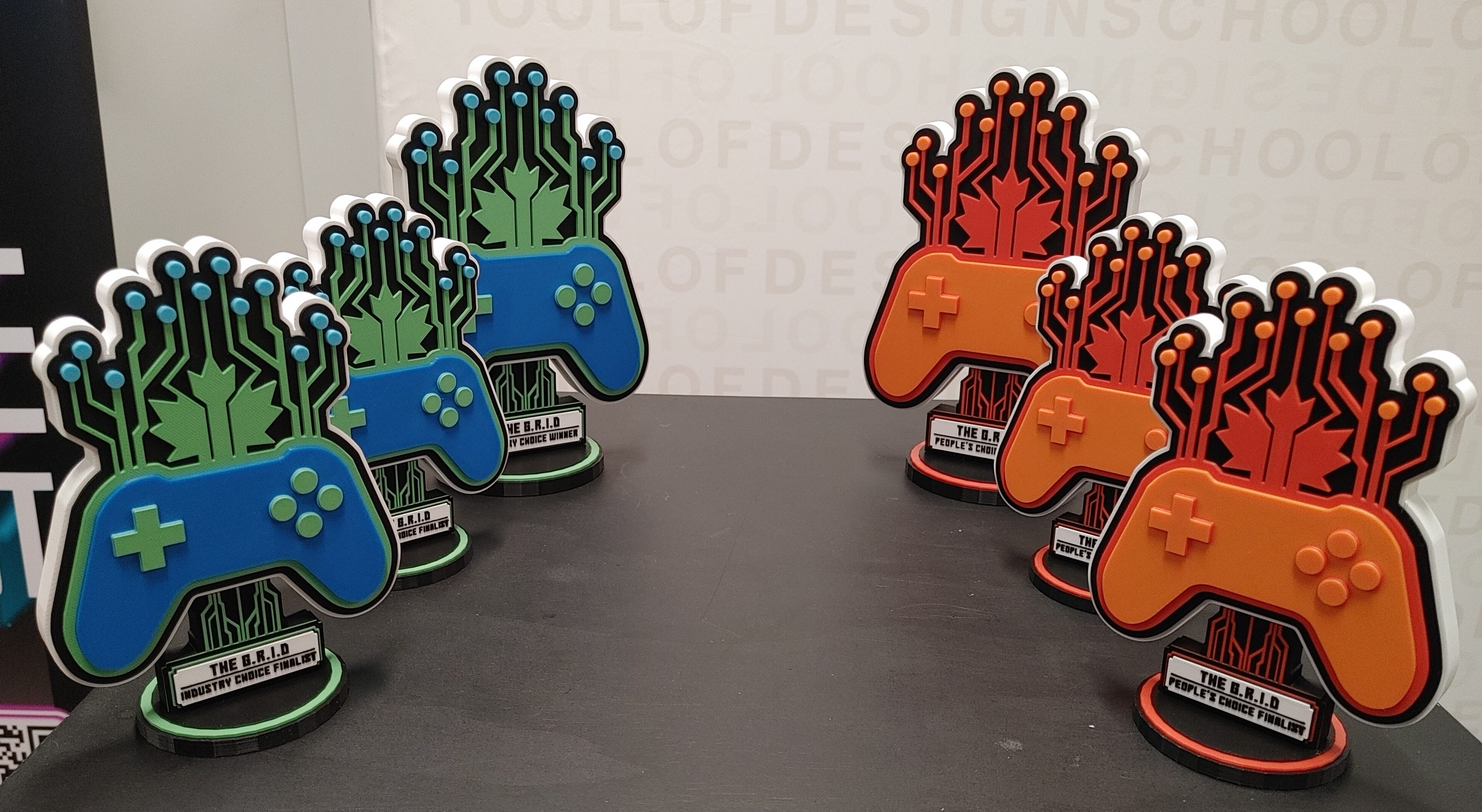
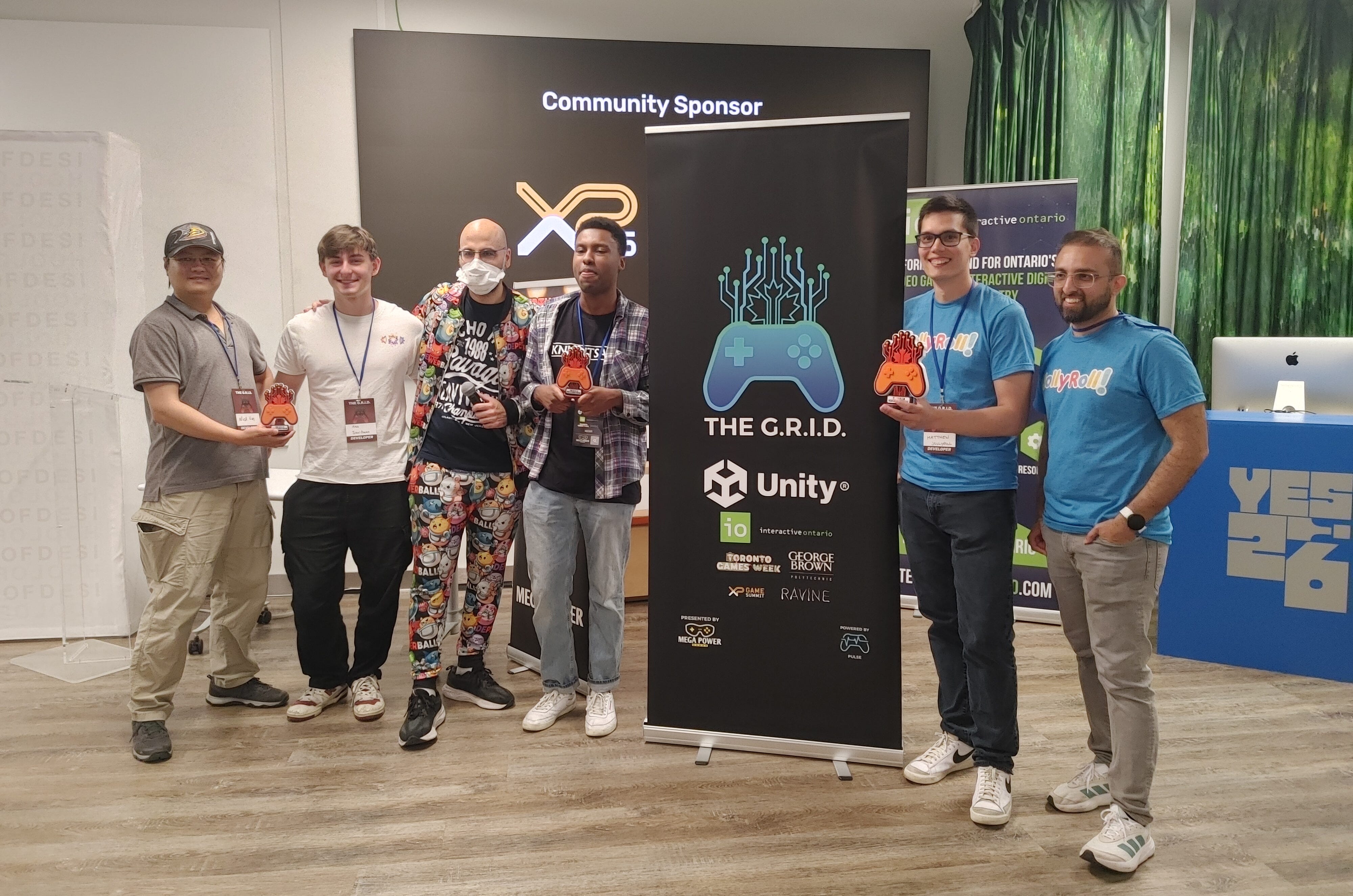
Marco Polo ended up winning the Industry’s Choice award of the evening. Khaos Keys by Qwqsoft and Chicken Scratch by Keely Brown and Mat Belanger won the second and third places, respectively. JollyRoll snagged an honourable mention from the judges, finishing in the fourth spot.
The final award of the evening was, of course, the People’s Choice, where JollyRoll, “always a bridesmaid, never the bride'‘, the way Miceli put it, finally won the much-deserved top honours.
Knightsaber by A Game by Shane took second place, while the third place was a tie between Taisei’s Angels of Battle and Alex Eckardt Games’s Soulflame. (Yes, an extra trophy will be made to account for the tie!)
The future
The G.R.I.D. wrapped up with much fanfare and comfortably on time. I expect great things from it in 2027.
Miceli is cautious, but excited:
Listen, I would love to be back. I said I would love to last year, and here we are! And the reason I came back was because a lot of people asked for it, and I have a feeling a lot of people are going to be asking for it again. It’s an iterative process.
Congratulations to all involved!