
'Hell is Us' is hellishly underrated
Approach its heavy content with caution, but don't sleep on the game's rich lore, meticulous exploration, and moody locales.

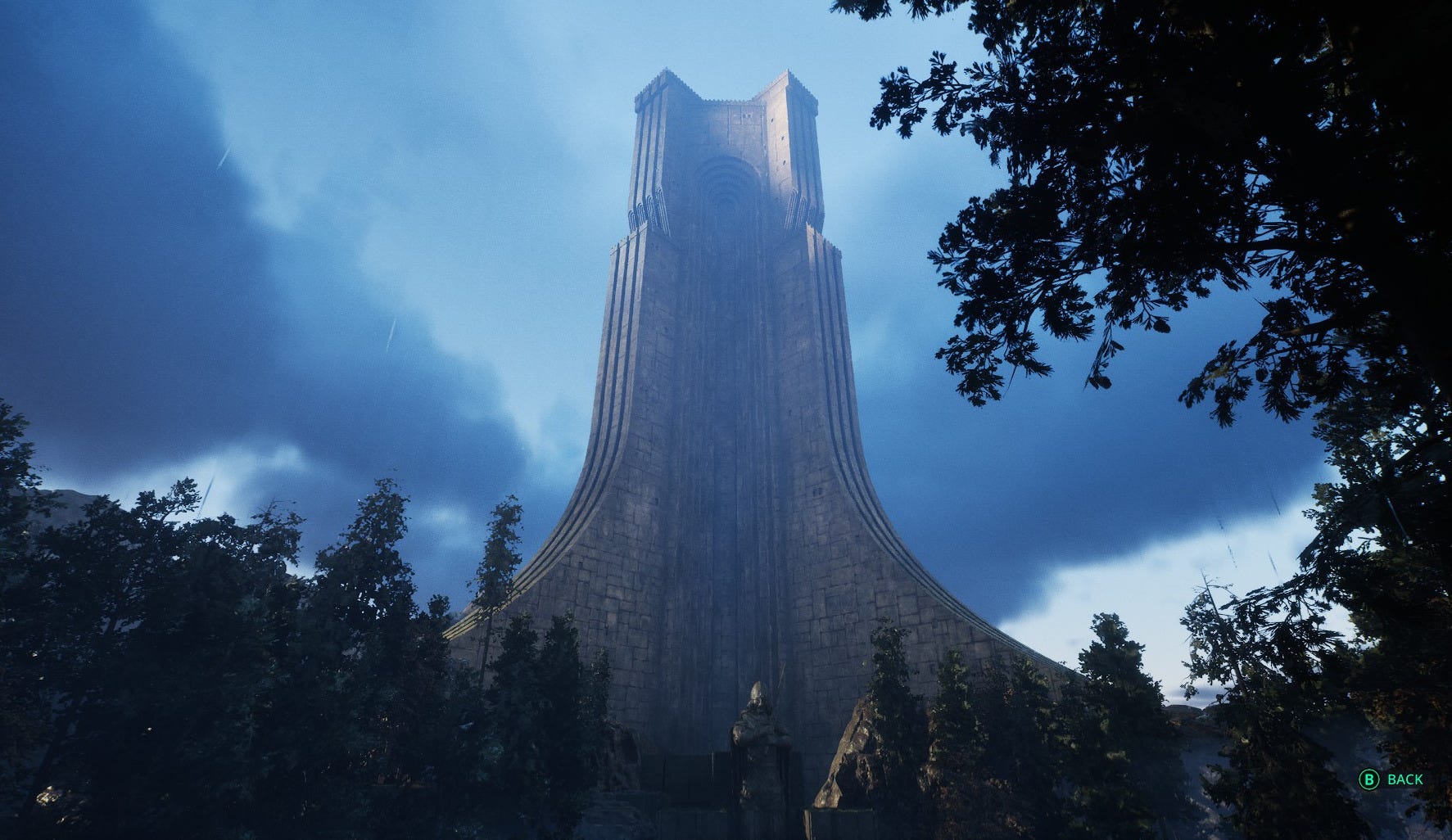
Mild gameplay spoilers for Hell is Us ahead.
I kept rewriting this intro paragraph over and over. Every sentence ended up with epithets like “masterpiece”, “achievement”, “incredible'‘, and “fantastic”, but gravitating towards them seemed excessive. Maybe because it doesn’t feel right to praise a game about war and genocide, stuffed to the brim with despair, mangled corpses, and dead children. Maybe, and this is most likely it, no one has praised this game as much as I want to, and what is wrong with me then? Is my taste in games this bad?
Fuck it.
Hell is Us is incredible.
Yes, the game has flaws. Yes, some mechanics could use work. Yes, Act 3 could be more fleshed out. But those, while valid and surely important to others, are simply not important to me. What the game offered and what I got out of it blew me away, not in the least part because I expected nothing of the sort when I started. It’s a remarkable achievement—an original, fully fleshed-out new IP with cool ideas, excellent voice acting, stunning visuals, clever level design, and writing of surprising depth and detail.
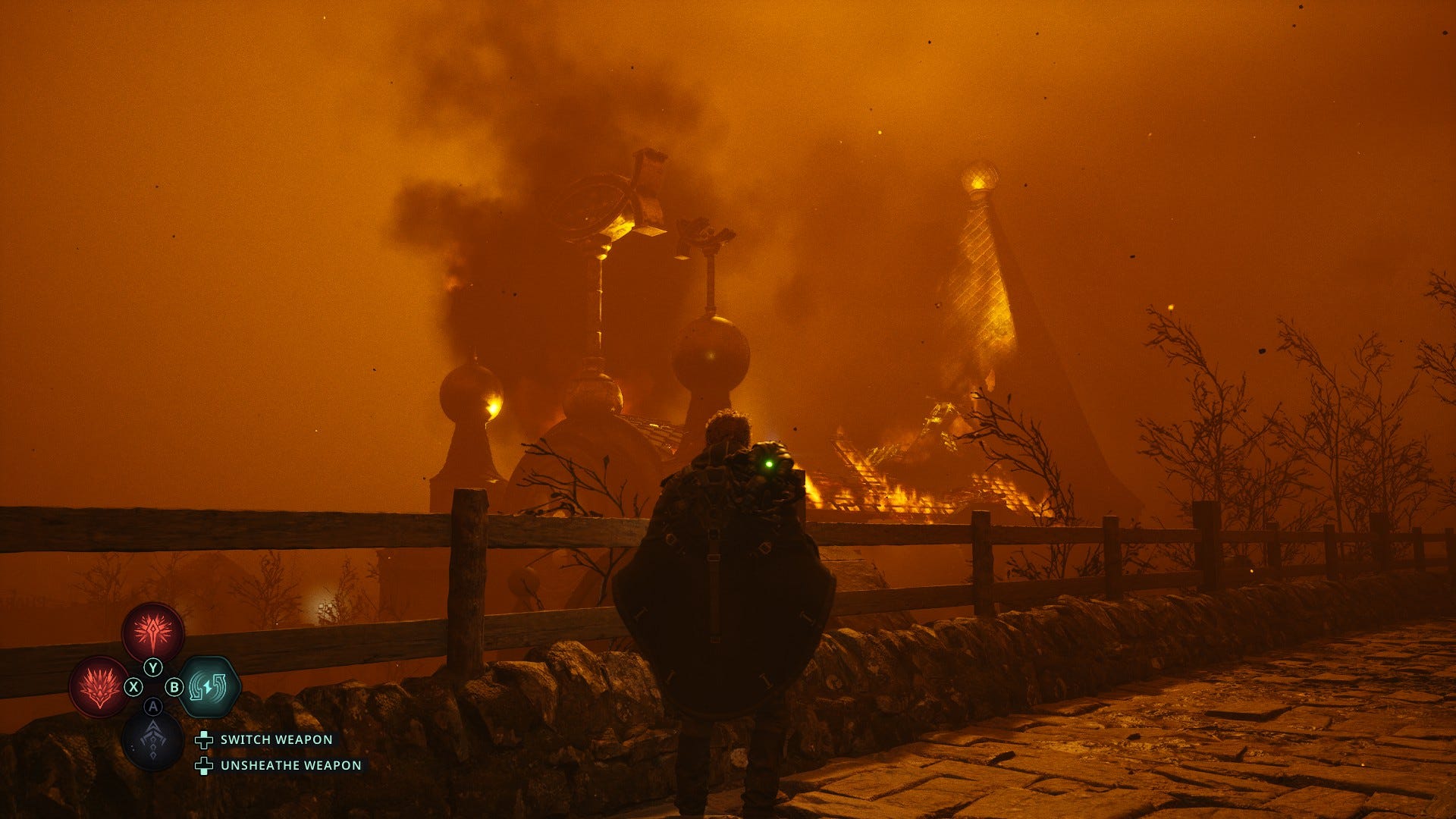
The extent to which it flew and continues to fly under the radar after its release is unfathomable to me, and I struggle to understand it. There’s Silksong to contend with, of course—poor schmucks had a release date of September 4, 2025, set in stone long before Team Cherry came in and totally hogged the indie game blanket. I’ve seen people say they were interested in Hell is Us but got carried away by Silksong, and who can blame them?
Yet, the unfortunate timing of the release can’t explain all of it. Was the marketing budget not up to the task? The game itself looks expensive. Did the marketing take a wrong turn somewhere? It’s tempting to throw in a cliche and say that the game isn’t sure what it is or what it wants to be. But that would be false. Hell is Us knows exactly what it is. It’s just very hard to market this way.
Trailers for the game surely don’t give you a good idea of what to expect. You may think they do, but they just… don’t.
Meet Hell is Us, an exploration and puzzle game masquerading as an action-adventure. You can see some of it in the trailers, but unless you played the game, you’ll likely pay it no mind and focus on the narration and the enemy design instead. It looks like an action game; it has even been labelled a soulslike by some poor sod, turning off many potential players in the process. (It’s not a soulslike.)
If, having heard and seen a few things about the game, you thought to yourself, “The combat looks sick, I’d try it”—don’t. Combat is, of course, one of the game mechanics, but the progression is tied not to fighting, and not to bosses, but to puzzling together clues, connecting the dots, and a whole lot of backtracking. Enemies are obstacles on the path, not its objectives. Unless you’re into scouting nooks and crannies for items and solving puzzles, the combat isn’t going to carry the game for you. In fact, it’s probably the game’s weakest link and the most deceiving part about its trailers.
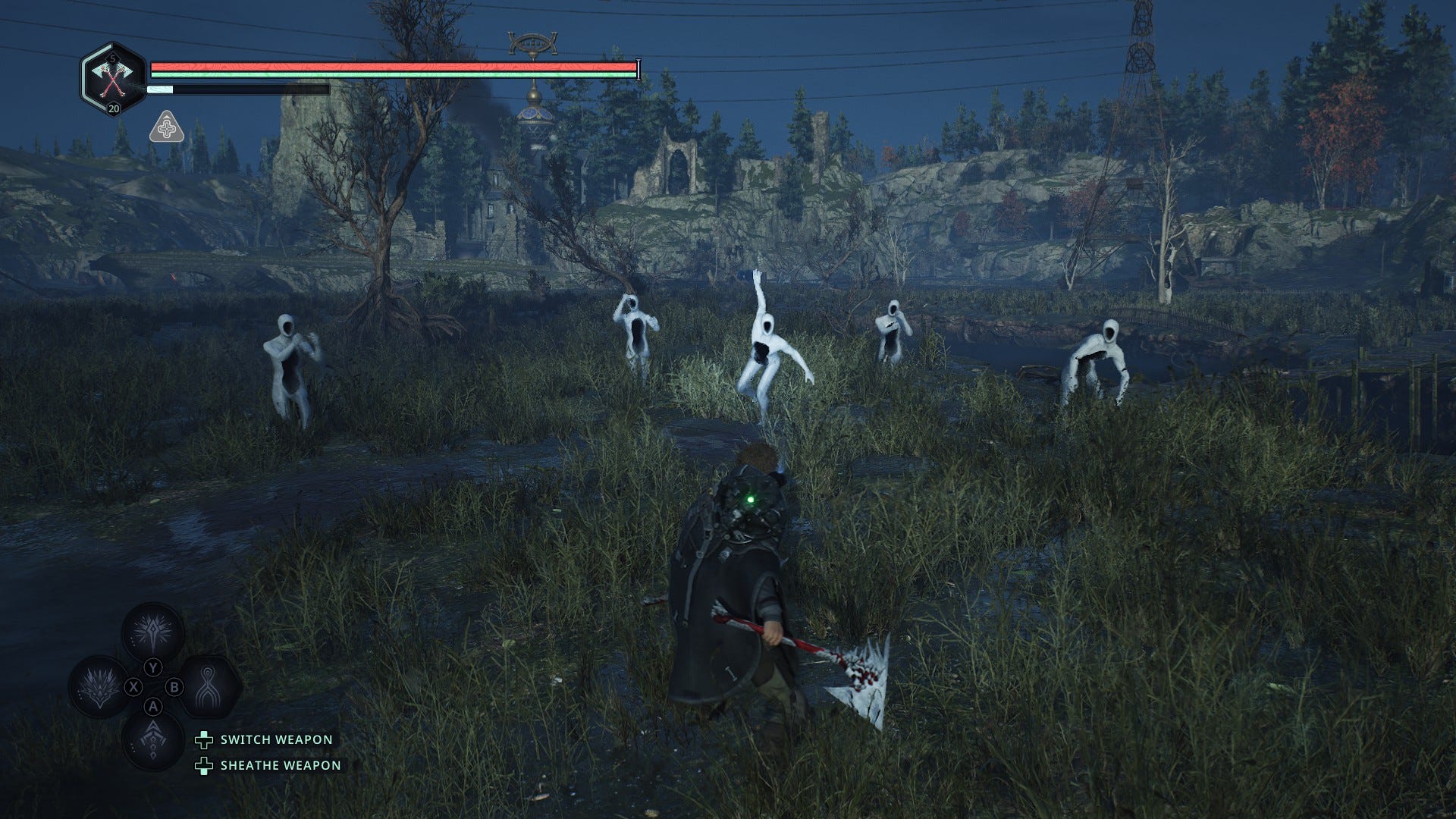
Had I known that before I started, I would have felt way less trepidation and would have been much less surprised by how much I ended up loving it.
To say I was reluctant to play Hell is Us is an understatement. The trailers made it look terrifying, bleak, tense, and combat-heavy. I was scared shitless in the tutorial area. To soothe my nerves and coax myself to continue, I dropped the combat difficulty to easy (“lenient”, as the game calls it), surmising that I wanted to explore rather than fight, and while this decision was correct for me as a player, it also ended up mirroring the overall experience and focus of Hell is Us.
The only enemies you fight in the game are pale, faceless entities of unknown origin. They vary visually and have different attacks, but there’s only a handful of such variations, and only three tiers of enemies themselves. Combat variety? Never heard of it. If you play on easy difficulty, as I did, and are diligent about weapon upgrades (also not difficult), enemies start dying in one hit at the beginning of Act 2. Once you locate a relic that allows for ranged attacks, one weapon and two moves can carry you through the whole game.
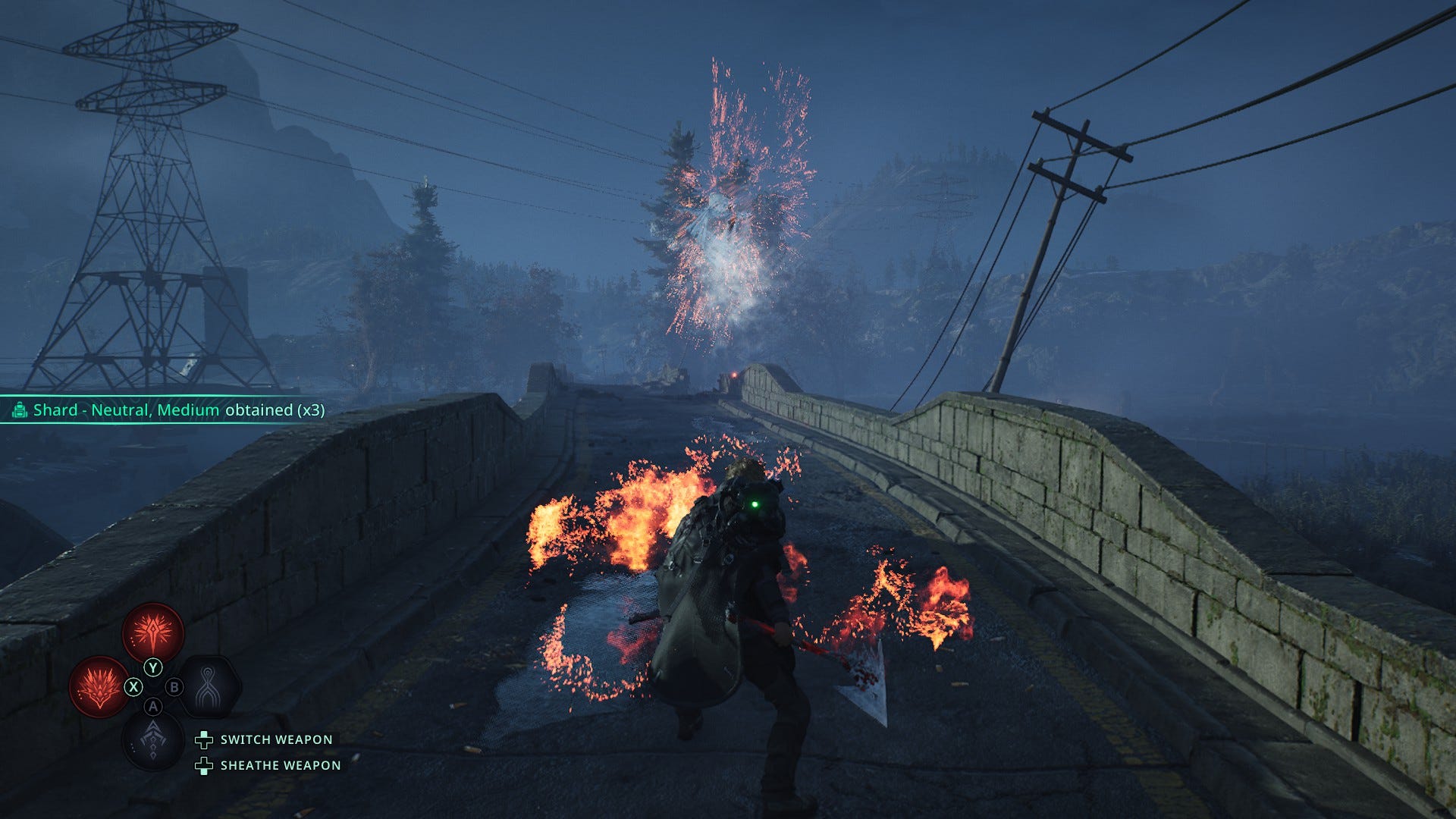
Sure, if you care to, the challenge can be ratcheted up. The difficulty settings are few, but you can tweak enemy health, base damage, and aggressiveness, as well as enable the “death penalty” option to reset enemies killed and materials collected between the last checkpoint and death. With more enemy health and a longer window for sustaining damage, you’d be forced to get more creative with the tools and weapons the game gives you—there are many, too many for the purpose. Such creativity is unwarranted for 90% of gameplay. The enemies are repetitive, and the combat is more of the same from start to finish.
That’s not my criticism, mind you. Lacklustre combat doesn’t phase me, as long as I can get through it quickly and get on with my exploration and side quests. However, players coming in expecting a soulslike level of quality will inevitably be disappointed. I wouldn’t want them to waste their time.
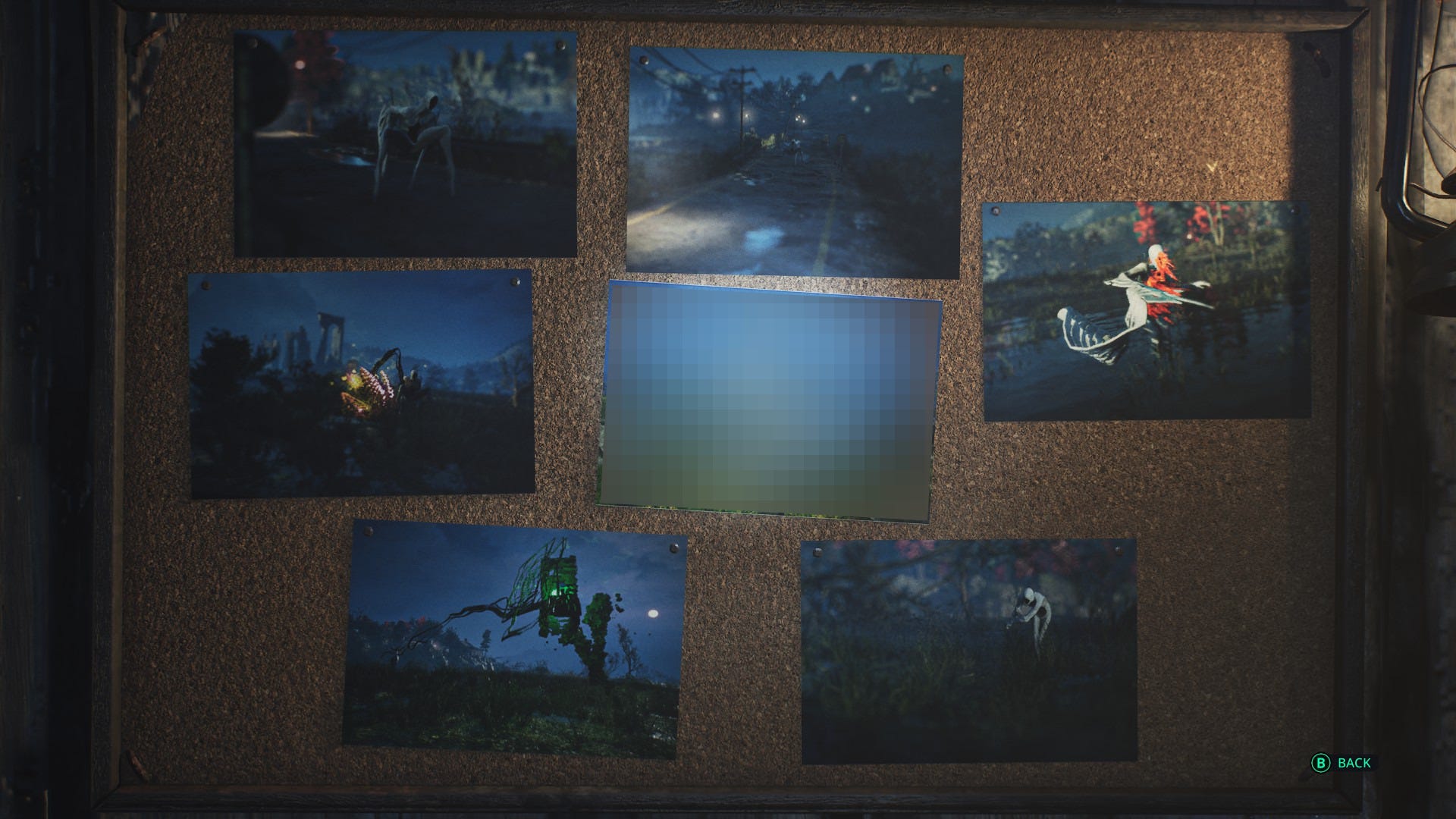
Exploration in Hell is Us is top-tier, as is world-building, the lore, and the (hi)story that you gradually piece together as Remi, who traverses the lands of Hadea, a fictitious country sealed off from the rest of the world, ravaged by civil war, dictatorship rule, and centuries of religious strife and struggle. You’ve got no map, no markers, and no quest objectives, which the game informs you of in the beginning. No overt handholding helps it immensely, although its importance is, in my opinion, overblown, given how detailed a notepad you get in-game, which records everything plot-related that happens.
I won’t go into detail about the plot overall. Neither its part about Remi nor the one about Hadea itself. What I will say is that the parallels with the real world are clear, but each of us will see them through a different lens, depending on our upbringing and the extent of our geopolitical knowledge. Some see Palestine and Israel in the Sabinian-Palomist conflict. Some point out the similarities between Hadea and Bosnia or Yugoslavia, including visual and chronological. For my part, I couldn’t shake the long-forgotten memory of the Rwandan Tutsi and Hutu that I studied at university as part of a senior-year course on sociology of genocides.
What a fun and upbeat game!
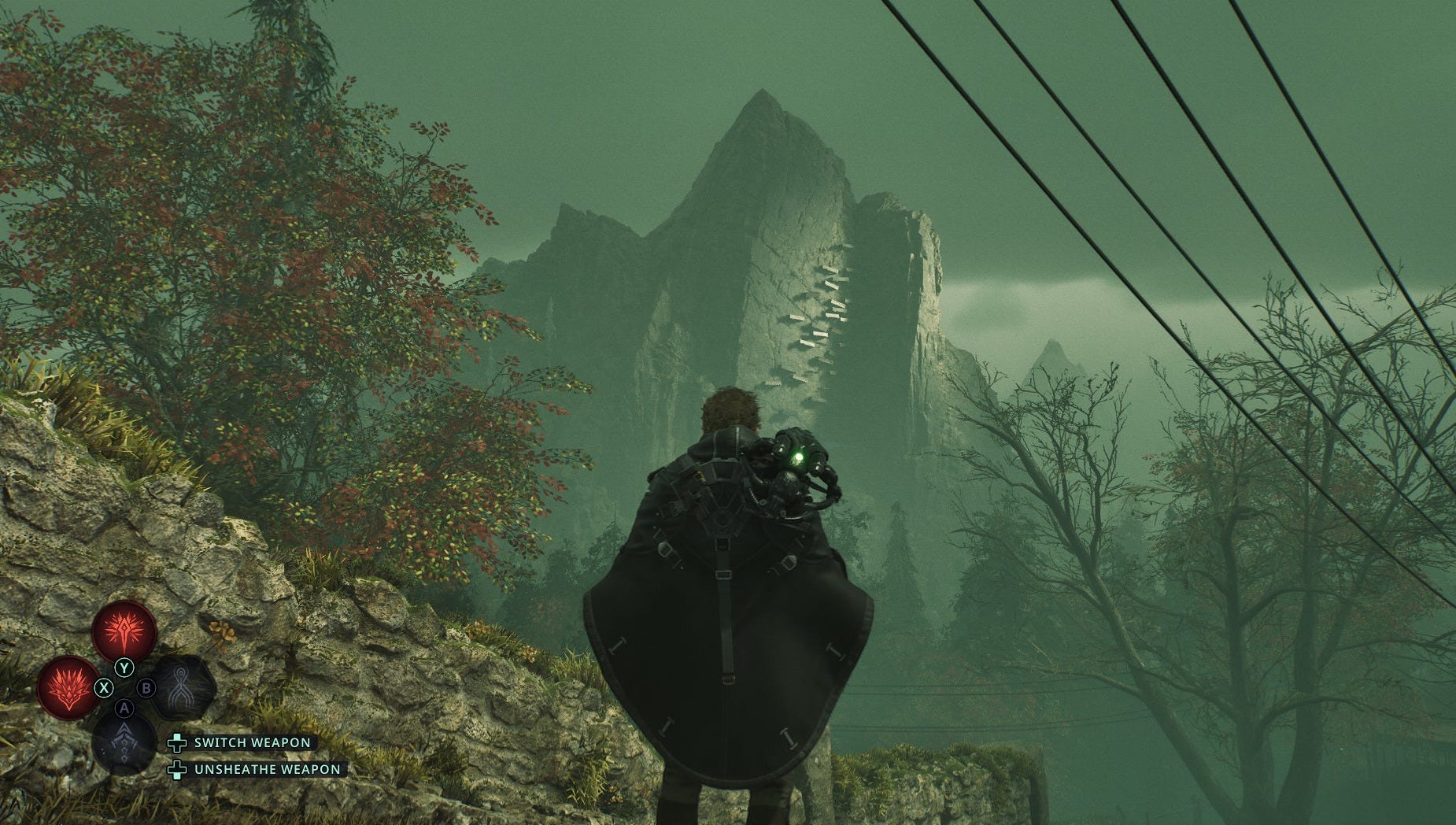
Dark and violent games are not my usual fare. We’re all exposed to enough horror on the news or, god forbid, close to home, to voluntarily seek out more of the same. Yet, I wanted to play Hell is Us, so I had to contend with the bleakness, too. It hit me like a brick in the beginning. A father clutching his dead wife and daughter; a woman who took part in a lynching and is now gang-raped by soldiers every night; civilians with their hands cut off to prevent them from voting; an abandoned baby wailing in the tunnel, hungry for milk. (Oh how I ran to the only cow in the game to fill up those milk bottles!)
Bleakness is a vital part of Hell is Us and the story it tells. It struck me as strange that all of the horror never felt over the top to me, probably because it felt real and believable. The game opens with it, after all. It’s right there in the title. Hell is us. War never changes. Both sides have been attempting genocide on the other for millennia. Oh, there’s an ancient torture tower here, too. Cool. Cool. Very cool.
Yet, the game doesn’t fall into the bothsidesism trap. I think this is what elevated Rogue Factor’s work from good to great for me. For the better part of the game, you suspect that’s where it will land, witnessing war crimes at every level, but the writing manages to be crystal clear that neither side is to blame while being individually guilty. Propaganda, warmongers and profiteers, and power-hungry sadists slowly emerge as the real enemy and the real cause of the millennia-long suffering crystallized as a supernatural curse. The stark contrast between modernity and antiquity fades and blurs into a knot tying them together with a bloody thread.
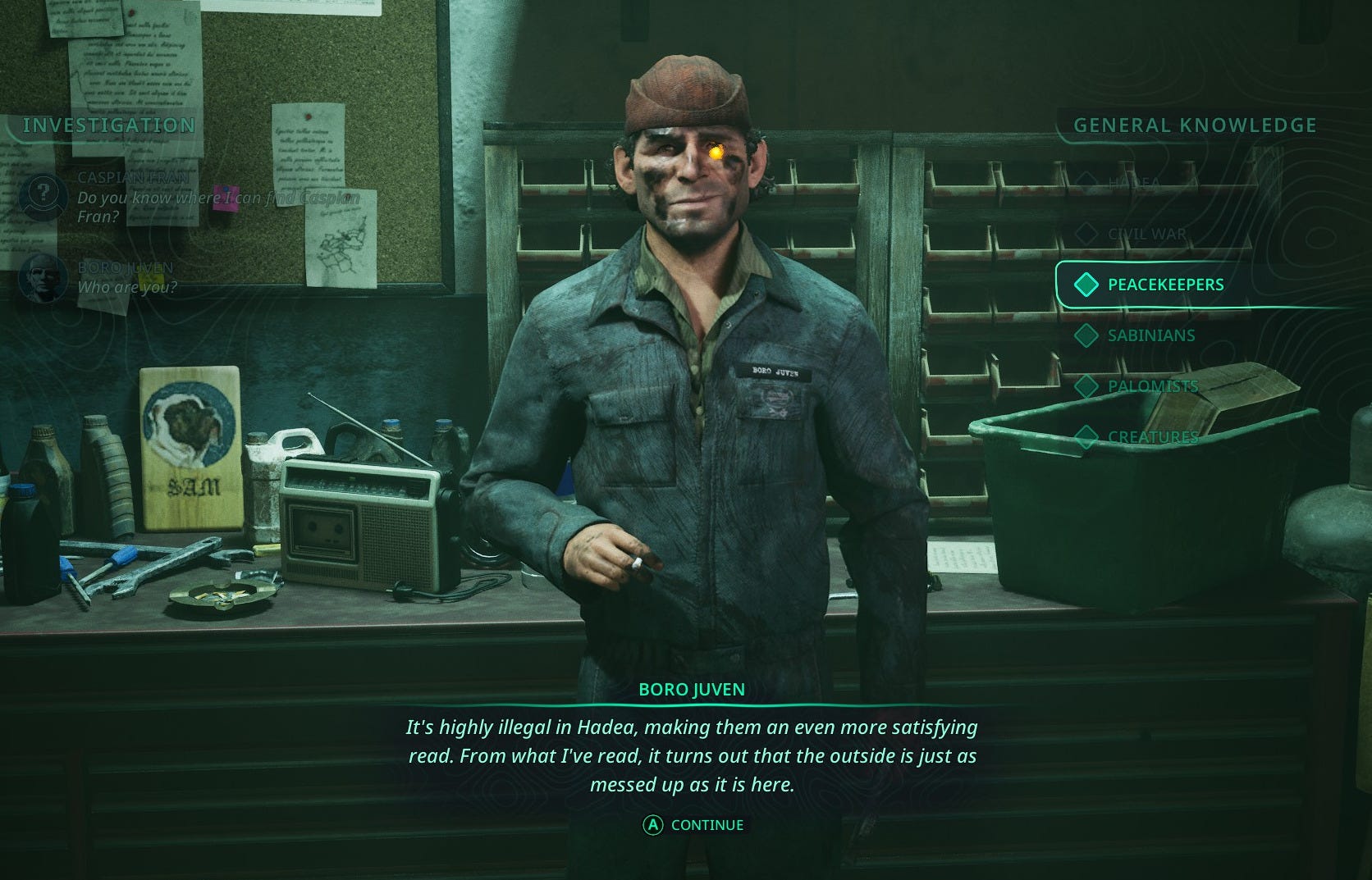
Despite its brutality, the game’s message is clear without being ham-fisted. I don’t know how the writers managed it, but they did. Hell is Us is excellent. If you can stomach it, go for it, although not wanting the many horrors it portrays in your entertainment is totally valid. The world of Hadea is insane, but it’s also insanely interesting and worth sinking your time into.
GG, Rogue Factor. If they make a sequel, it has the potential to hit it really big.
Brilliant review! Sounds like too much to me rn but I admire the devs' ability on sewing such heavy stuff in a seemingly mature way within a videogame™ environment--with clarity about what they wanted too? Fantastic.
The way I RAN to wishlist this!!